




One app for the whole club.

Training and crews, race day, messages and parents, safeguarding, forms and fees. Built for rowing clubs, from a junior squad to a university first eight.

Look around a full club as a coach, an athlete or a parent. No account needed.

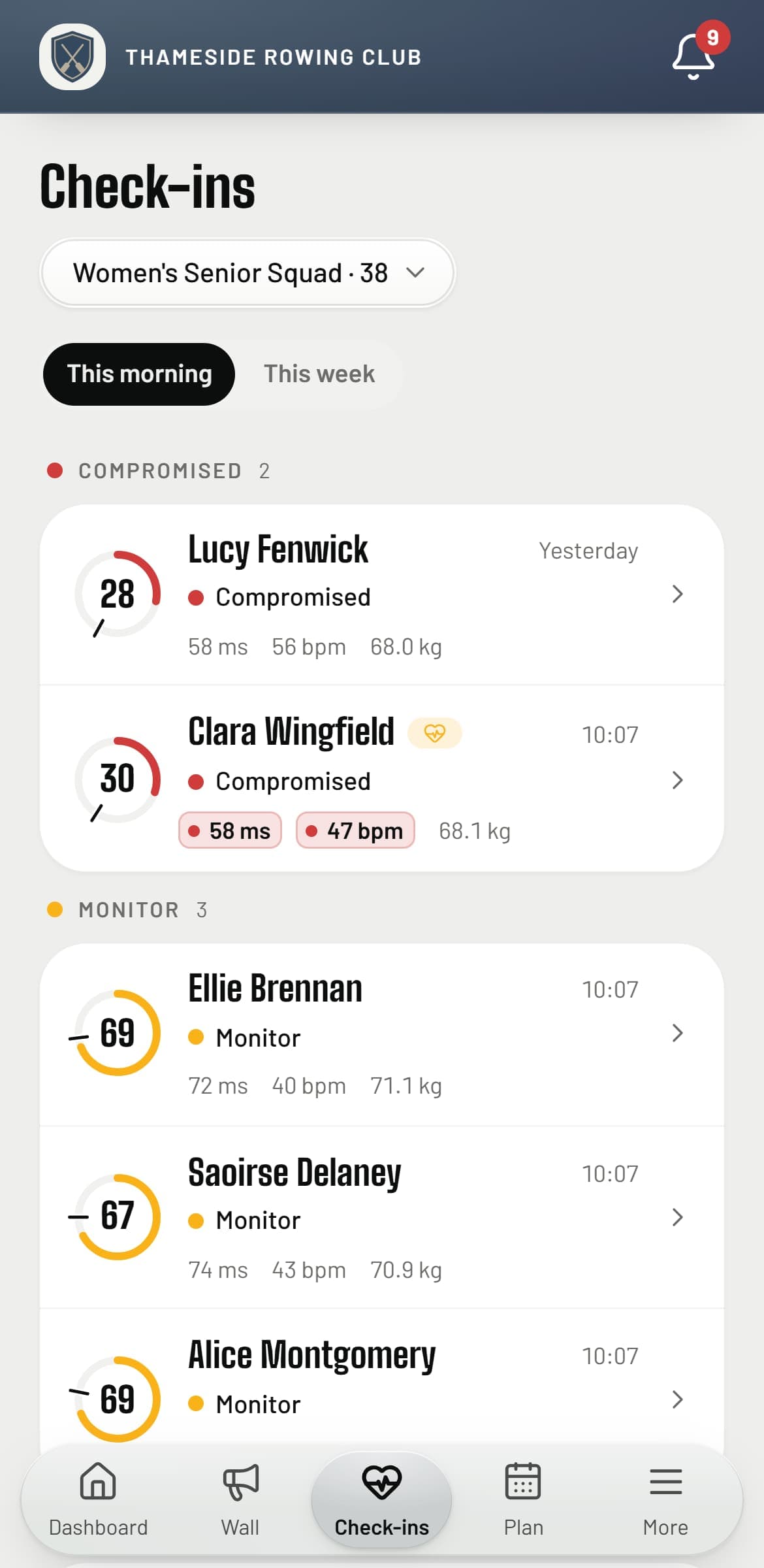
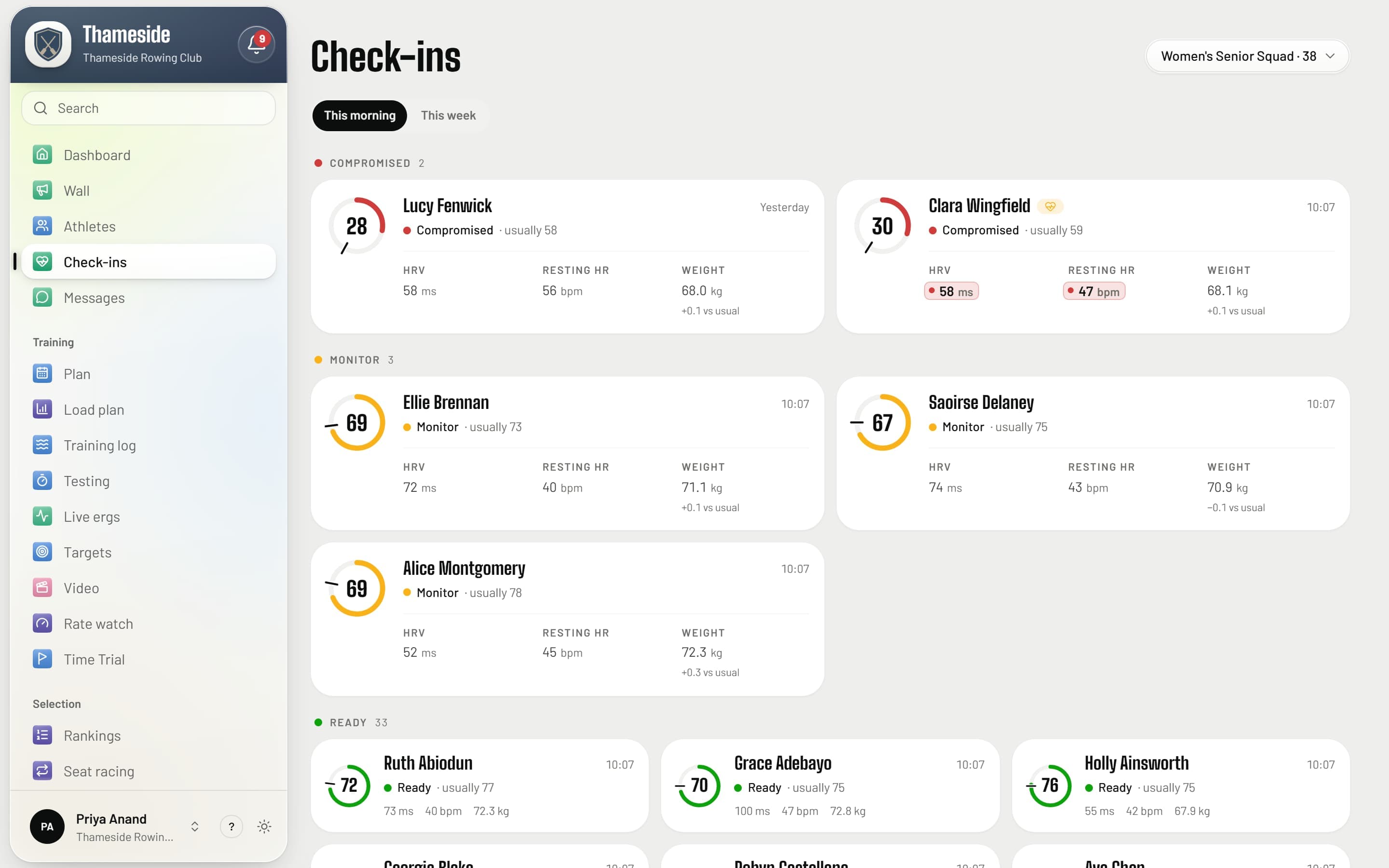
A coach's morning check-ins, compromised first, each athlete against their own usual
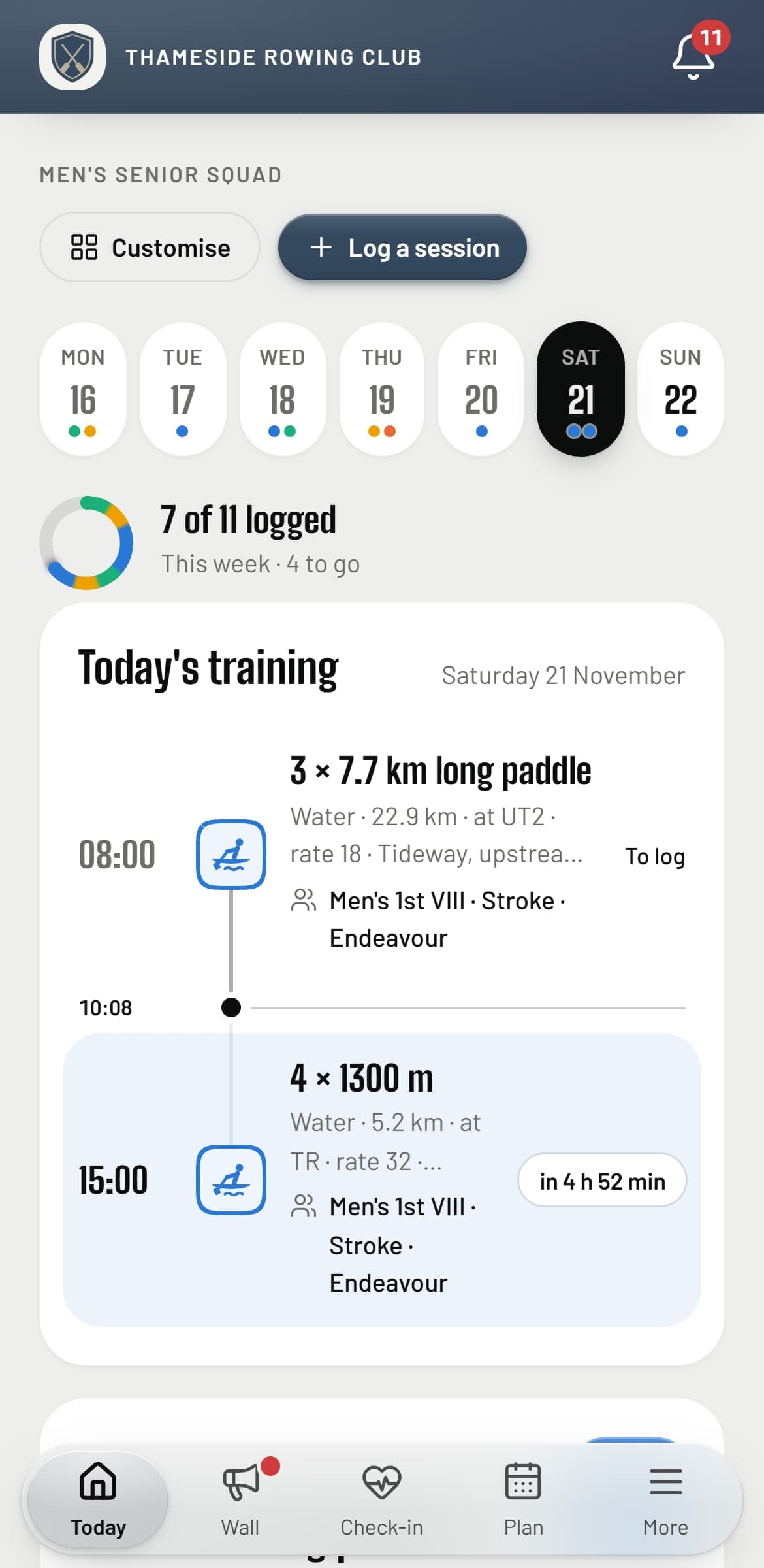
An athlete's Today: this morning's check-in, the week and today's training

Brings in training from

Also Garmin, Oura, Apple Health and RP3.

The whole club

Everything a club runs on.

The group chat, the spreadsheets and the shared drive, in one place.

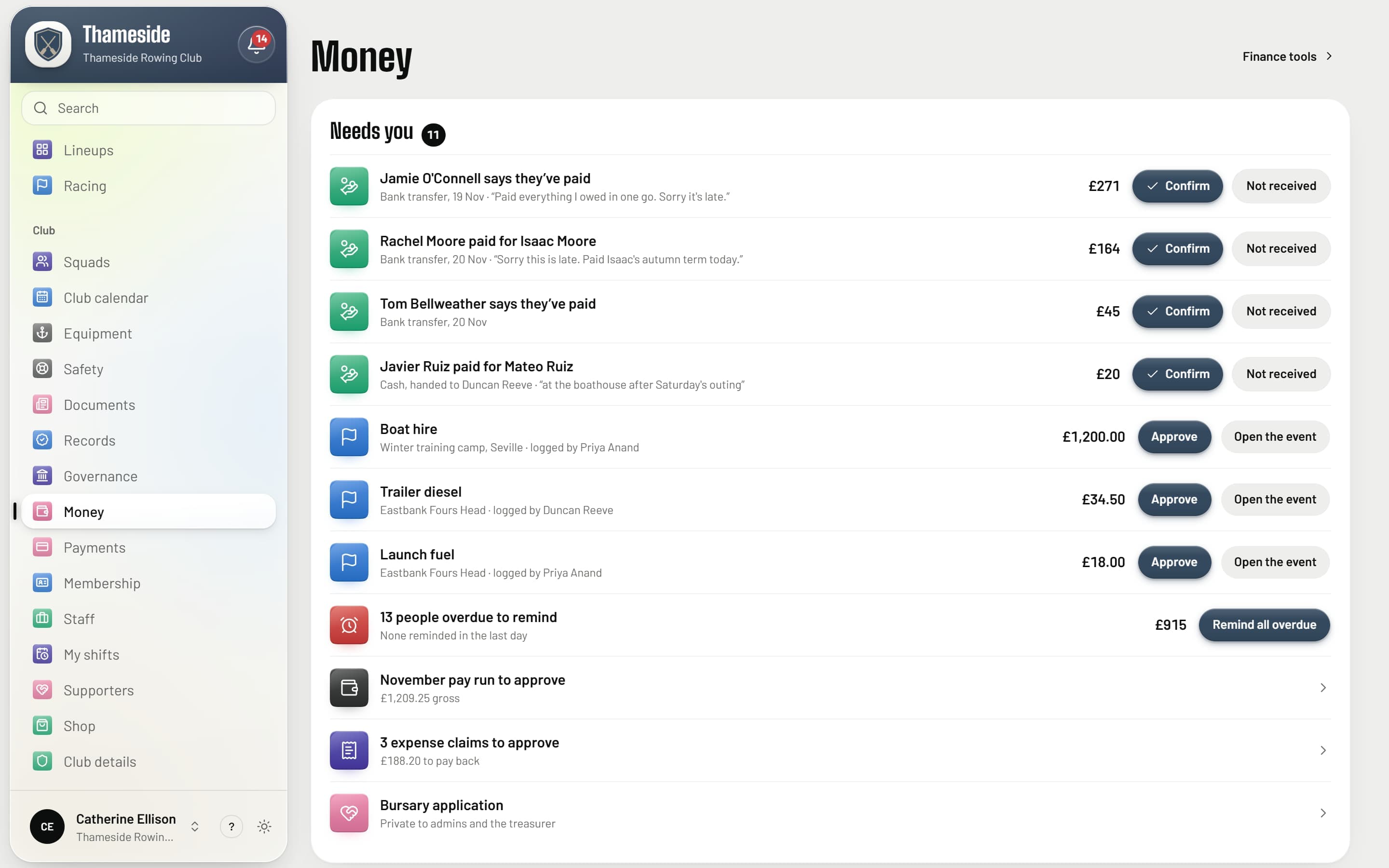
The club's Money on a laptop: people who say they've paid, costs to approve, overdue members to remind
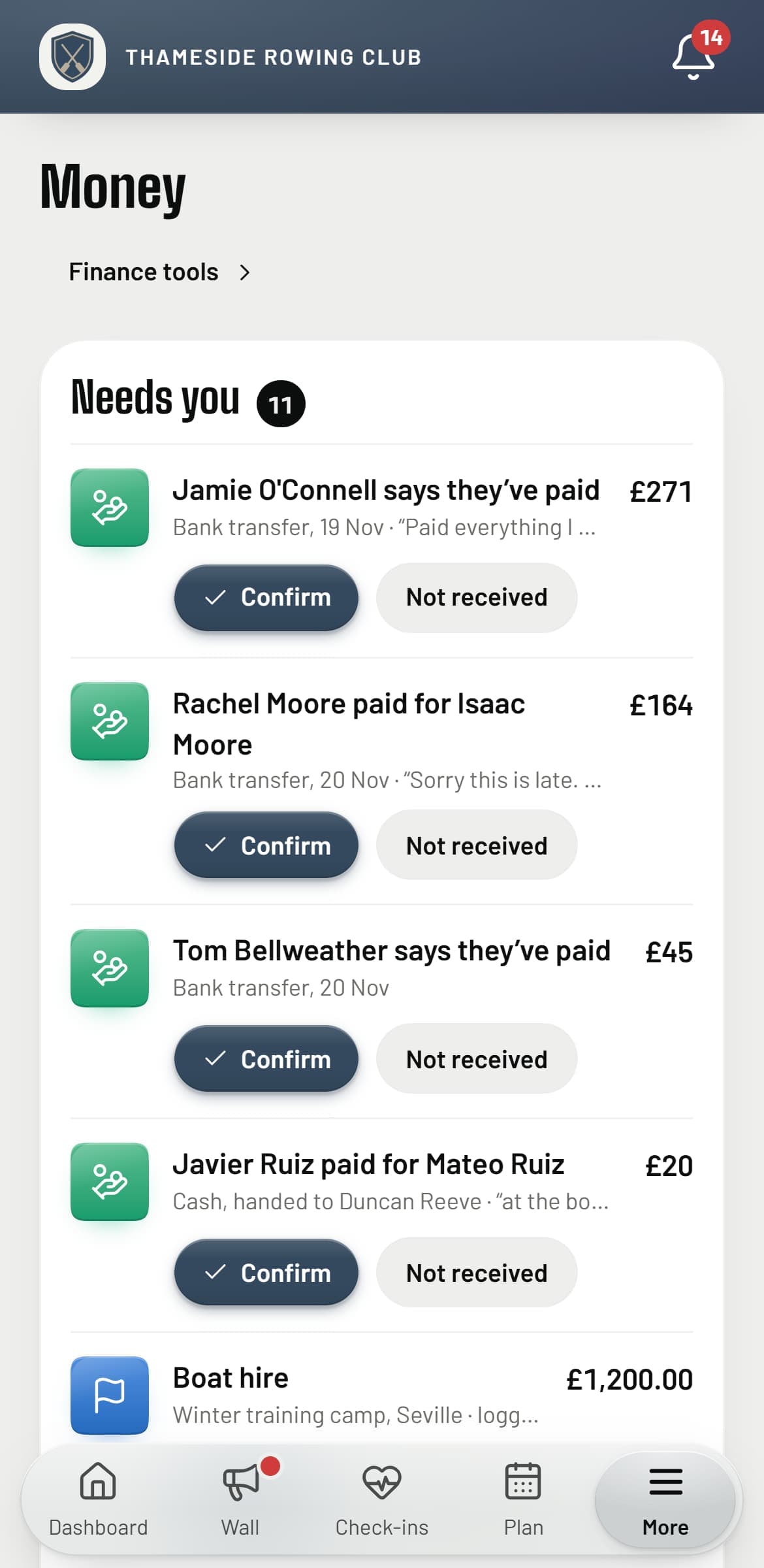
Money on one screen: who says they've paid, the costs to approve and who to remind, oldest first.

Also

  • Squads and sub-squads
  • Injuries and availability
  • Club calendar
  • Rota
  • Video with technique review
  • Weather and the river
  • Ask AI, for coaches and athletes
  • Live ergs over Bluetooth
  • DBS and PVG reminders
  • Coaches' pay

For coaches

Your squad, before the outing.

Who trained, who’s run down and how the week is building. Every number can be taken apart.

  • Plan a block in minutes

    Write a session once, repeat it across the block, and see the load it adds before anyone rows.

  • Message the squad

    One athlete, a crew or the whole squad. Replies come back to you privately.

  • Know who to check on

    Morning check-ins, compromised first, each athlete against their own usual.

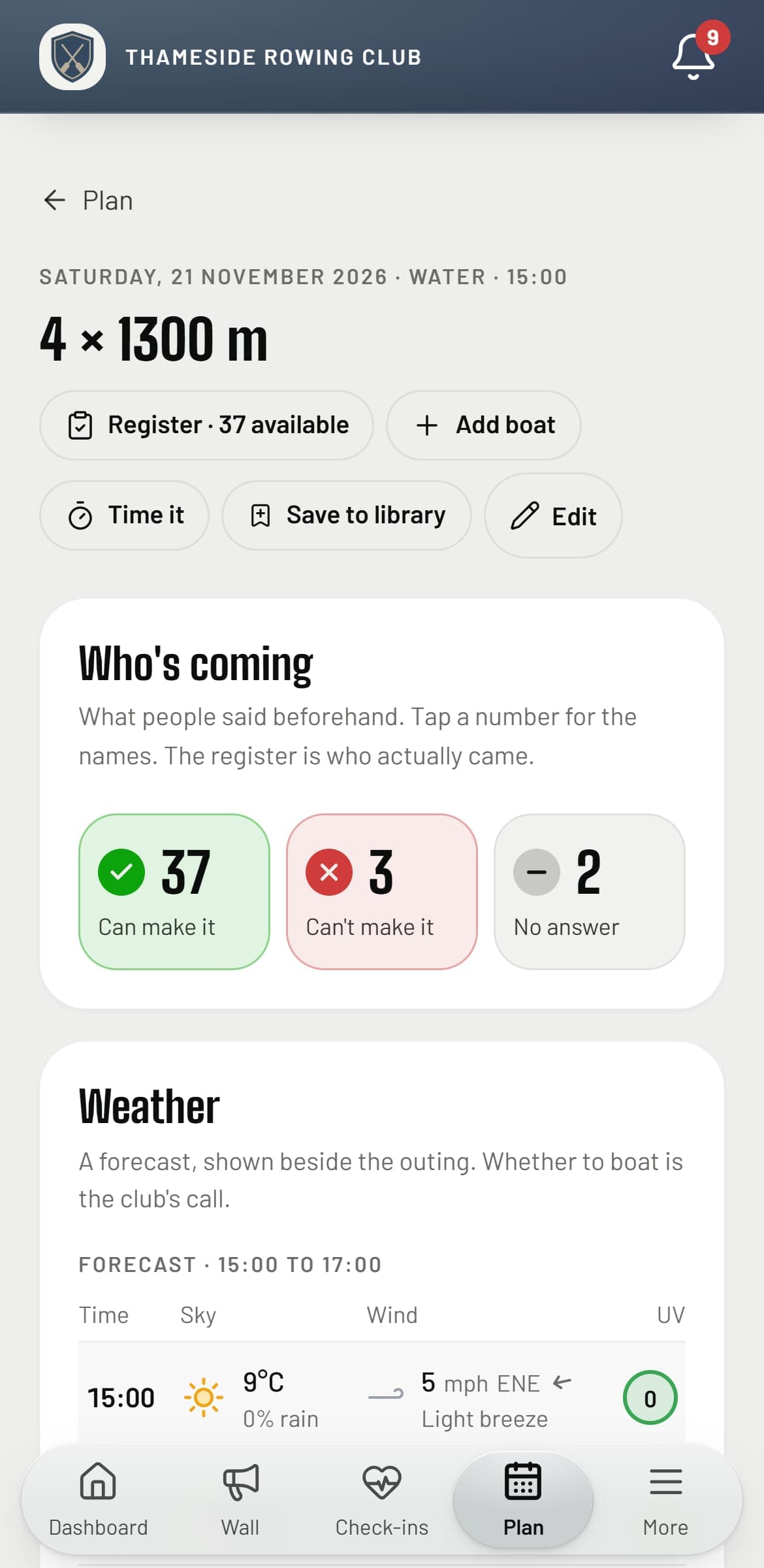
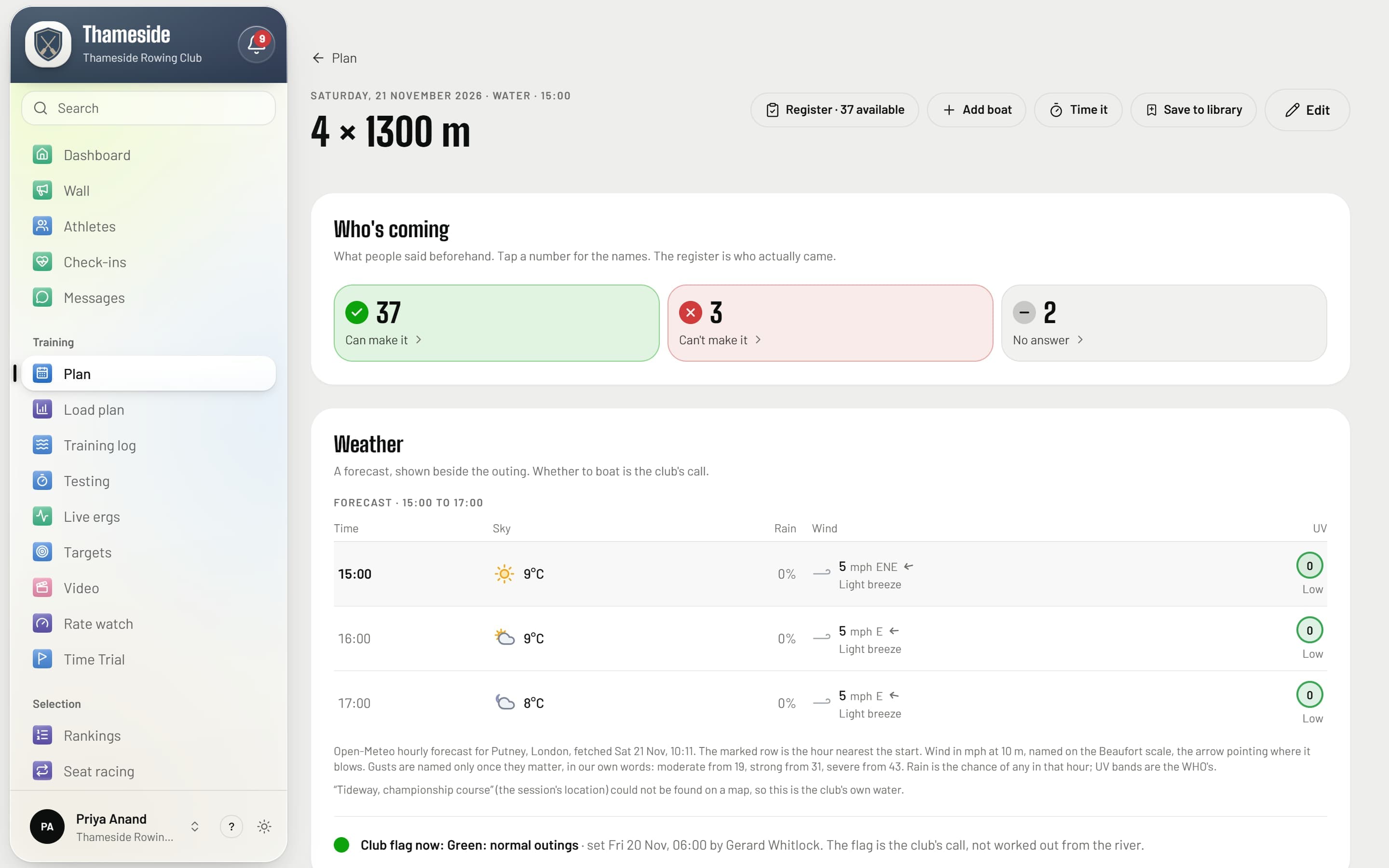
  • See who's coming

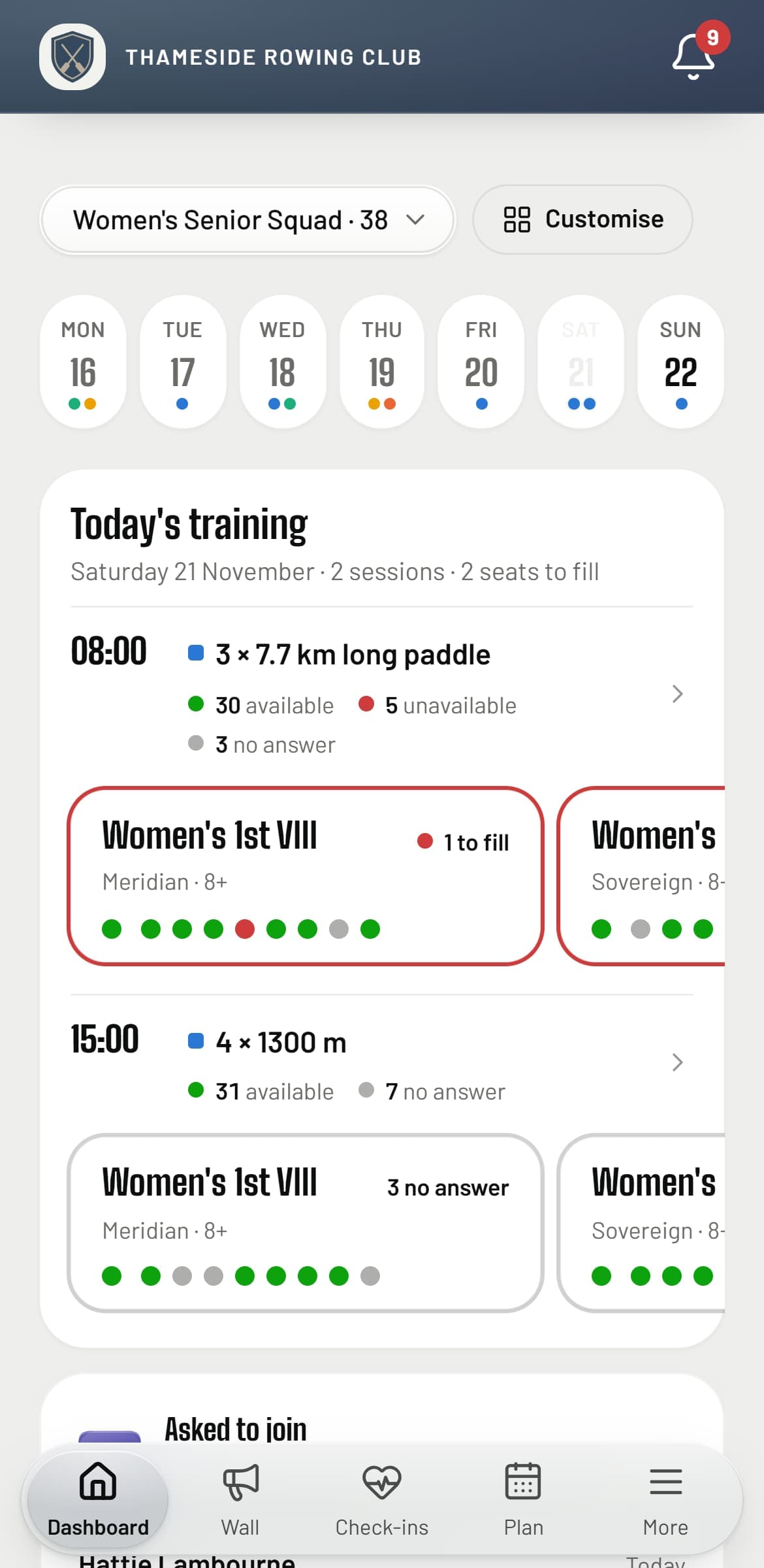
    Who can make each outing at a glance. If someone drops out, the seats to fix are waiting with the likeliest swaps.

The coach's check-ins on a laptop, grouped by readiness
A coach's dashboard on a phone: today's three sessions and the crews for the outing
An outing: who can make it, who can't and who hasn't answered, then the weather
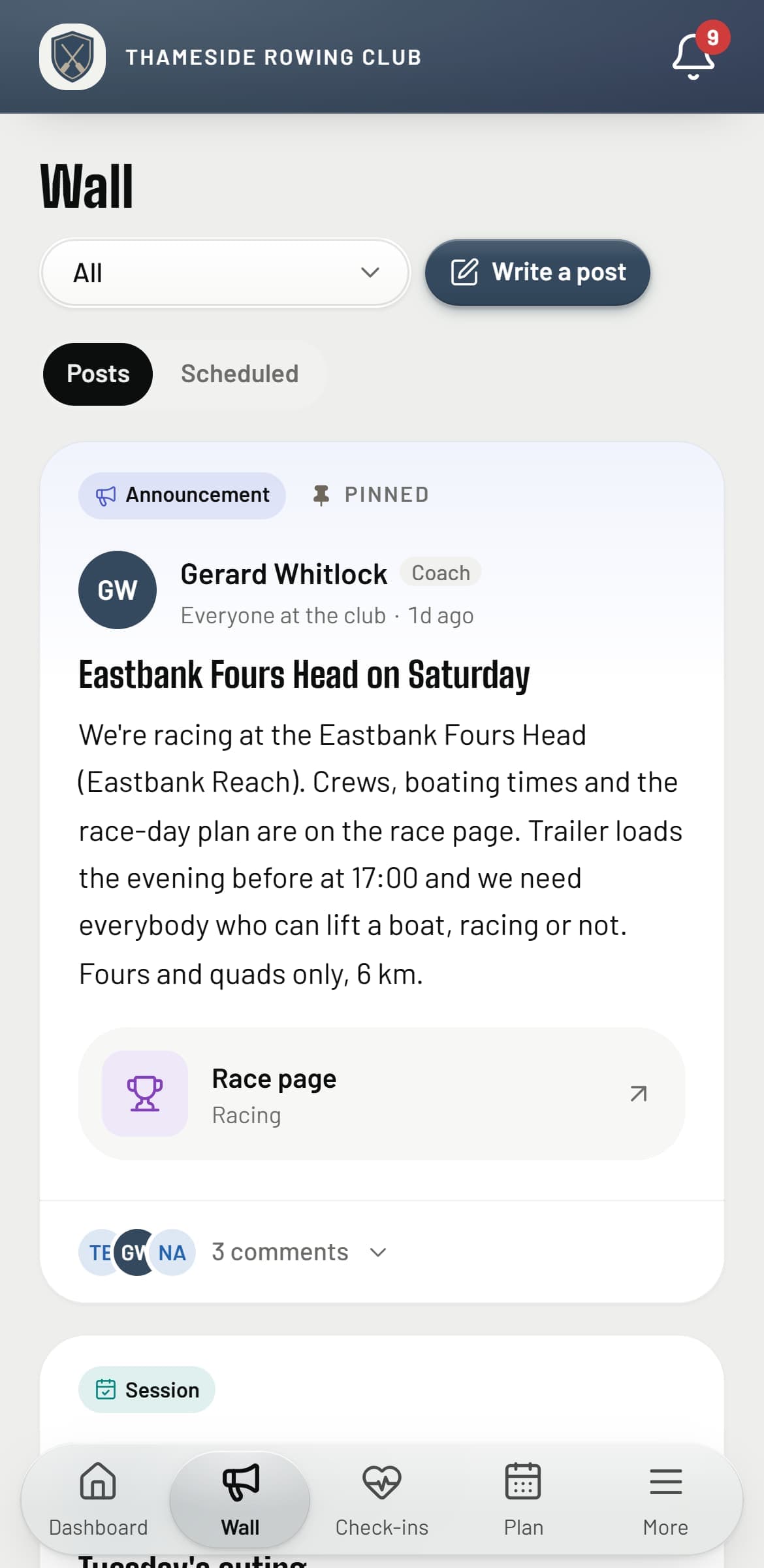
A coach's morning check-ins, compromised first
An outing on a laptop: 37 can make it, 3 can't, 2 haven't answered, and the forecast for each hour
Every outing: who can make it, who can't and who hasn't said, and the forecast for the hour you boat.
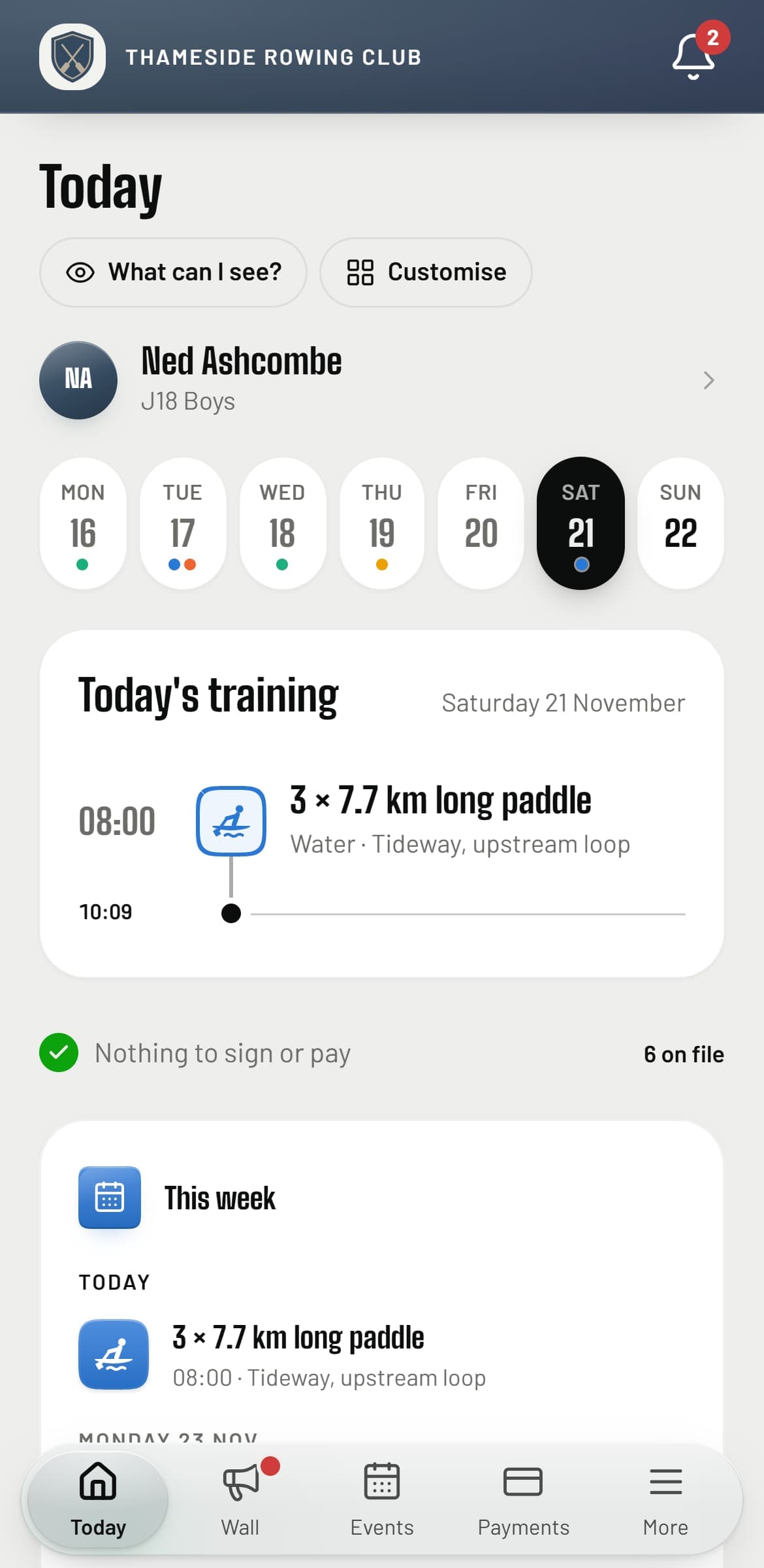
An athlete's Today: this morning's check-in, the week and today's training
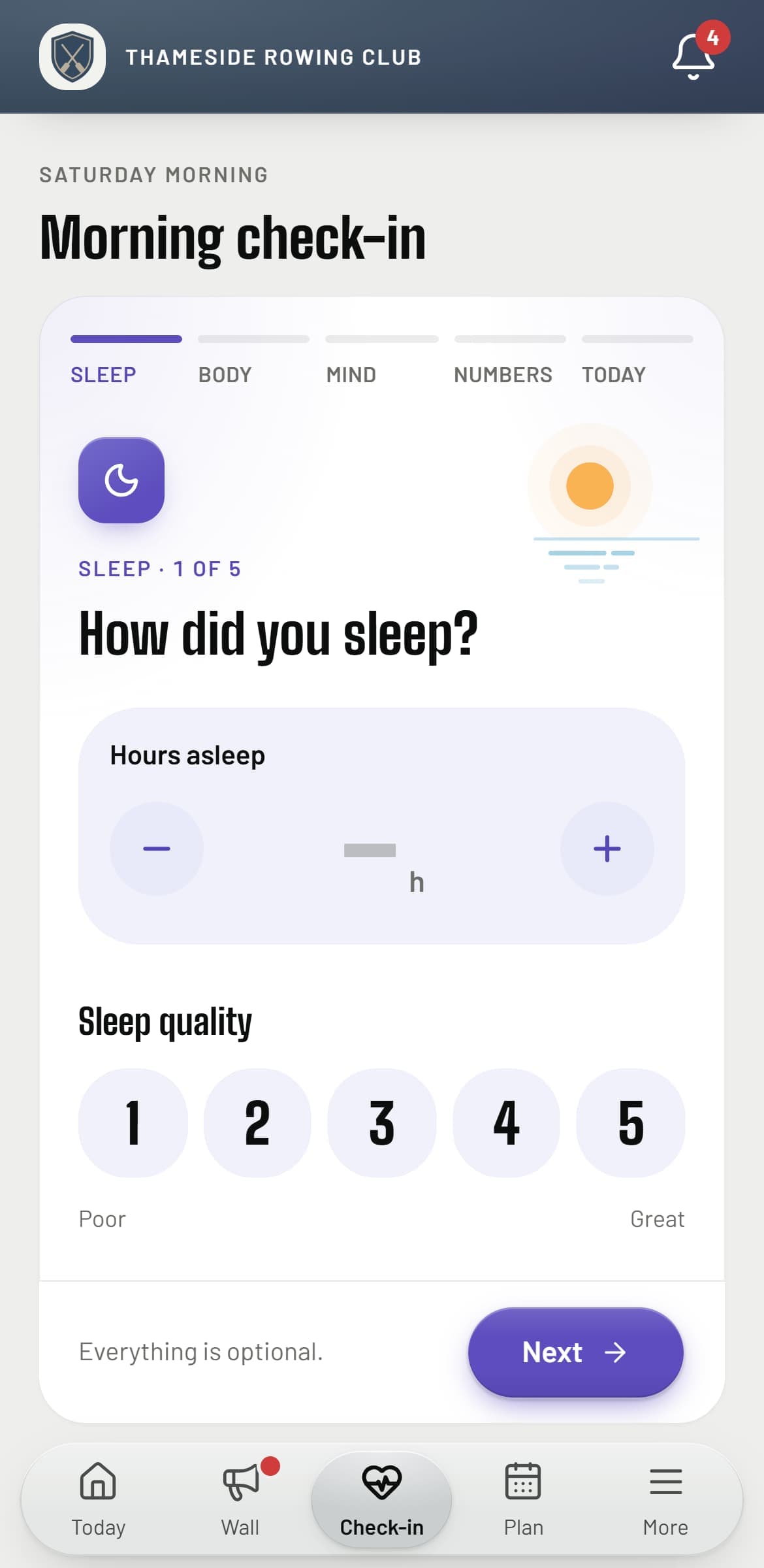
The morning check-in: how did you sleep, hours asleep and sleep quality
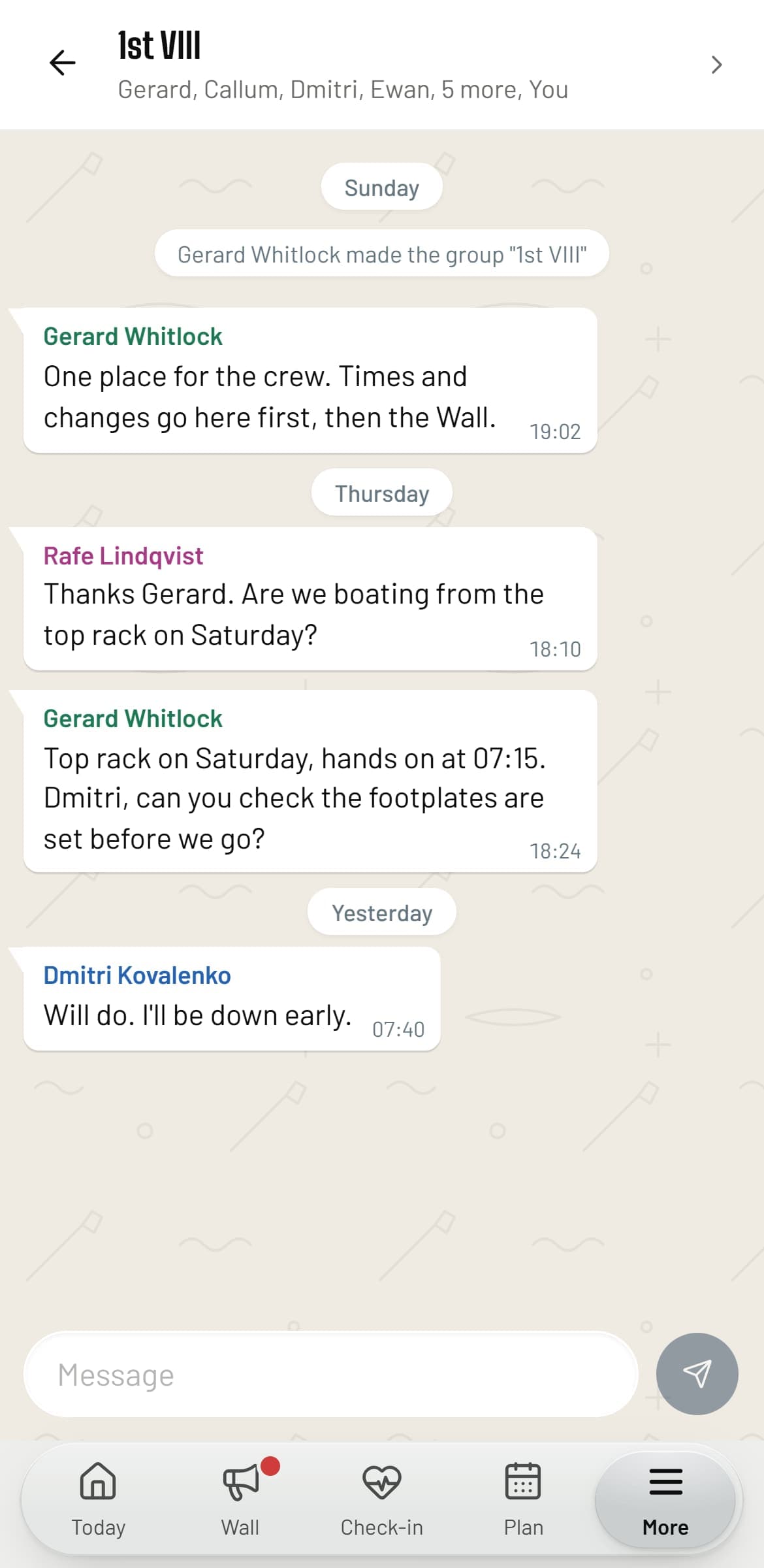
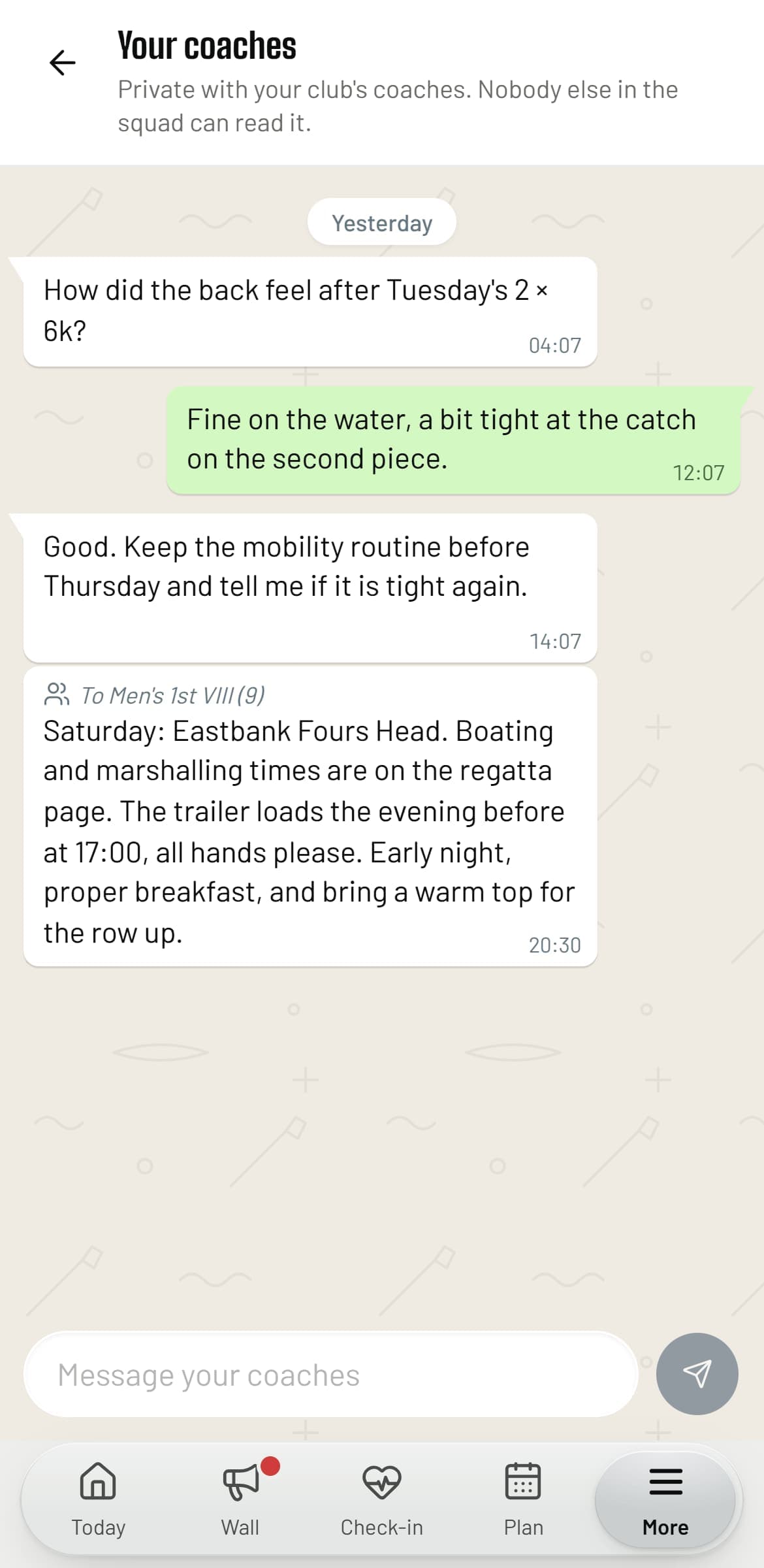
A private chat between an athlete and their coaches
The season story: Tom, this is your season so far

For athletes

Your day, in the order it runs.

Open the app and it shows what’s next. Your erg, watch and strap data come in on their own.

  1. An athlete's Today: this morning's check-in, the week and today's training

    01

    What's next, first.

    Check in, today's session, then how it went. In the order the day runs.

  2. The morning check-in: how did you sleep, hours asleep and sleep quality

    02

    A check-in that knows your usual.

    Sleep, soreness, mood and HRV, each read against your own usual rather than anyone else's. A Whoop, Oura or Garmin fills in what it measured.

  3. A private chat between an athlete and their coaches

    03

    Your coaches, one message away.

    A private chat with the people who coach you. Reply to a squad message and only they see it.

  4. The season story: Tom, this is your season so far

    04

    Your season, as a story.

    The distance, your biggest week, your bests, and a card to share with the crew.

Your data stays yours. You choose to share it with your club, and you can stop at any time.

For performance squads

Every number shows its working.

Training load, form, readiness and seat-race ratings, for the squads that want them. Tap one in the app and it shows the working below.

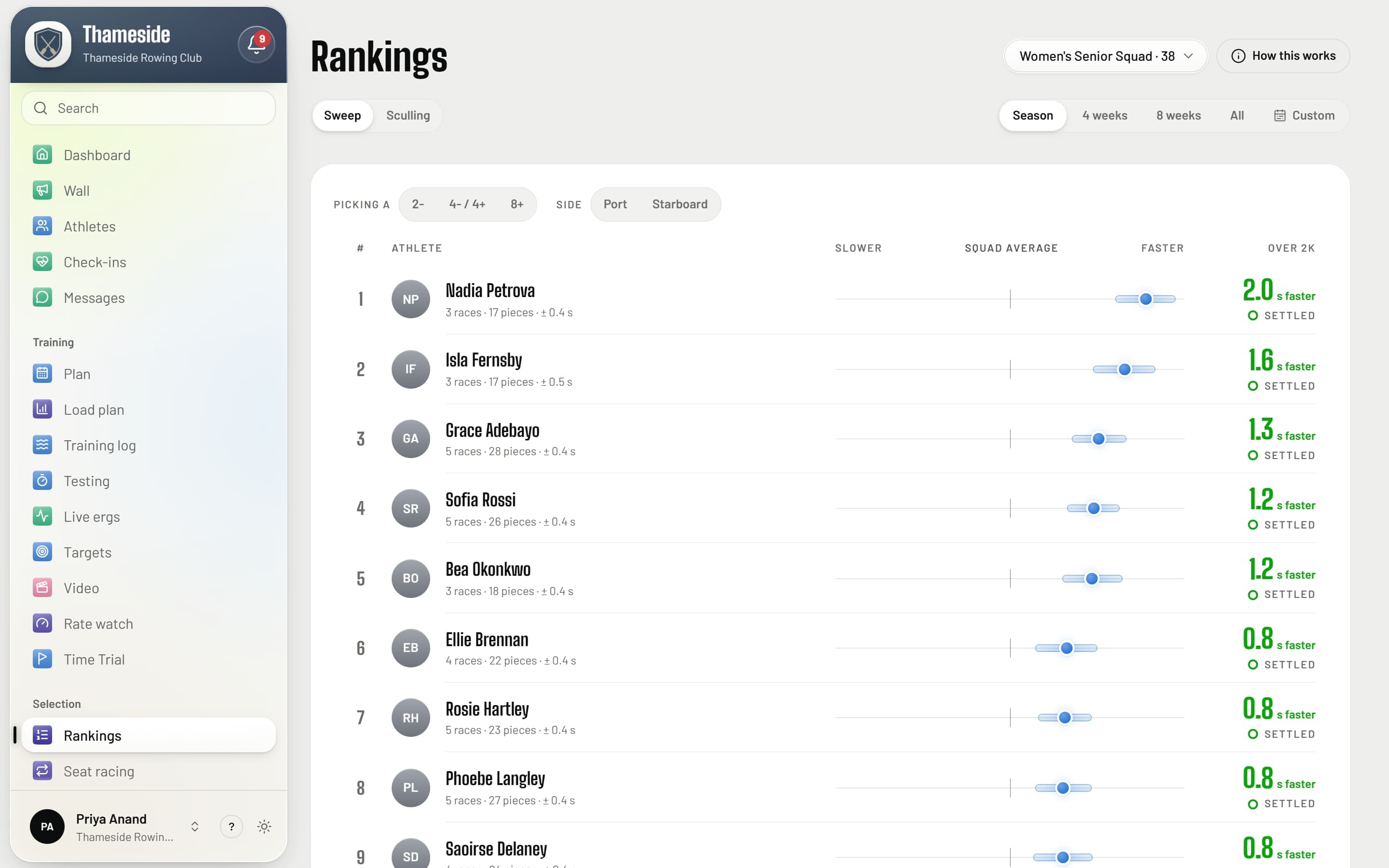
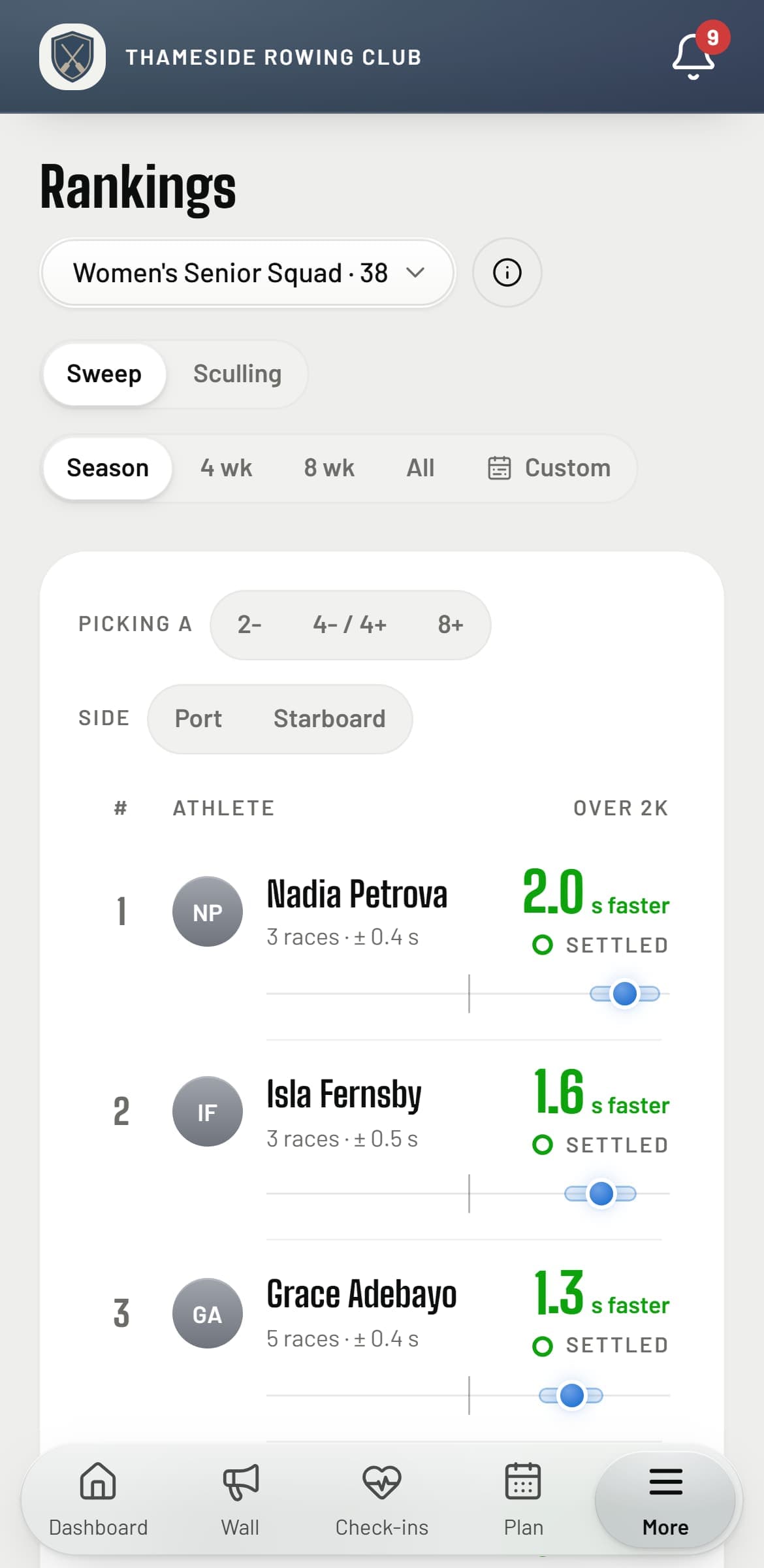
Seat-racing rankings on a laptop: each athlete's margin over 2k with its interval
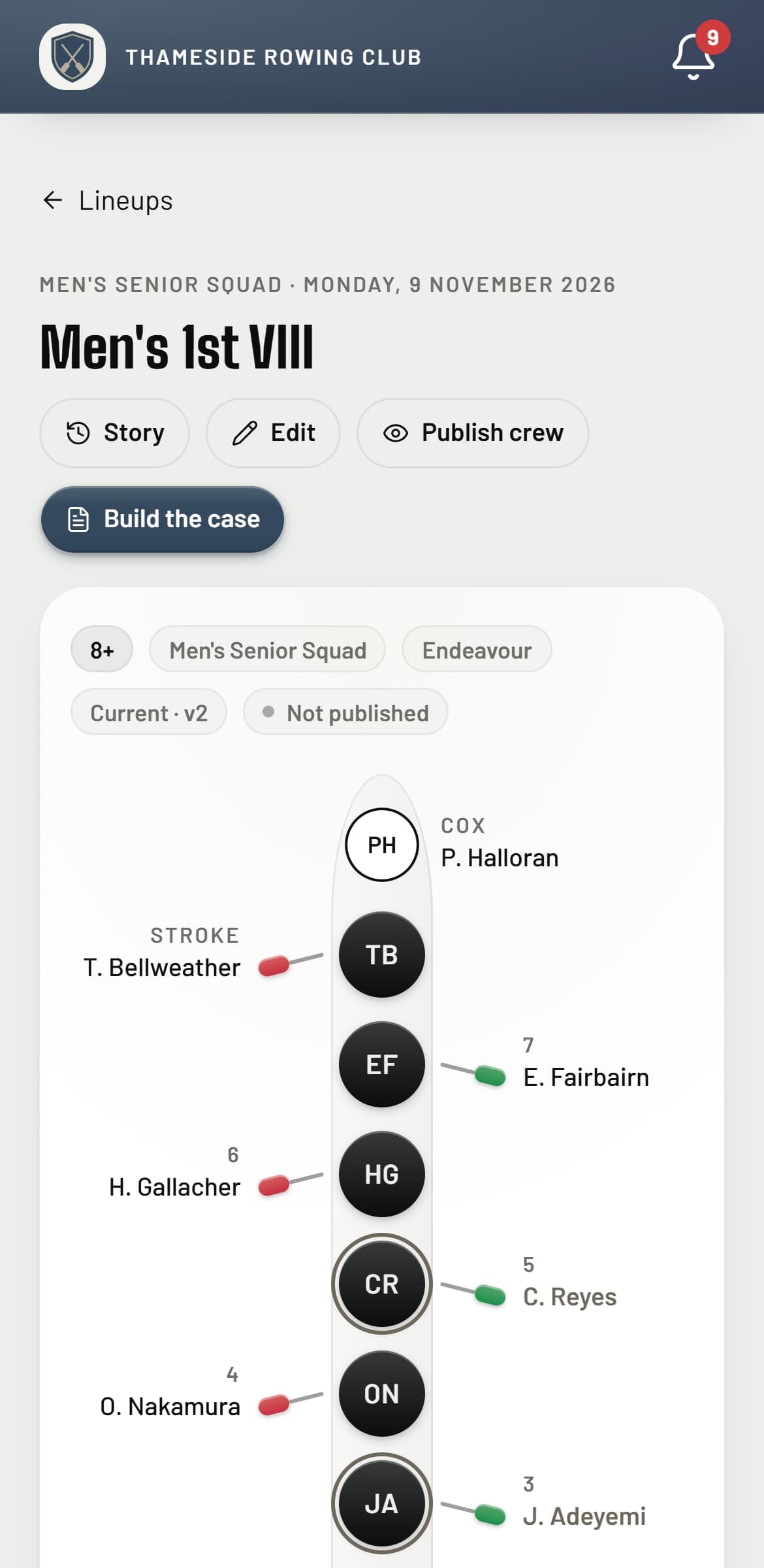
A crew on a phone: the shell drawn from above, each seat on its side
A crew: the shell drawn from above, each seat on its side
Seat-racing rankings: each athlete's margin over 2k, and whether it is settled
Seat-race rankings over 2k, each with its margin of error, and the crews built from them.

Training load

How much a session took out of you.

60 min at UT247
6 × 500 m at 2k pace25

load = hours × intensity² × 100

The time you spent working, weighted by how hard it was. Hard is measured against your own threshold, roughly your 2k pace plus seven seconds a 500, so the same session counts for more when it’s closer to your limit. An hour at UT2 scores about 47. Six 500s at 2k pace, under ten minutes of work, score about 25.

Without a 2k on file, it is estimated from how hard you said it felt.
Readiness

How ready you are this morning.

67Monitor
  • Sleep6.2 h
    Worse than usual
  • Soreness4/5
    Worse than usual
  • Mood4/5
    Normal for you

Each answer in the morning check-in is scored against your own last four weeks. 50 ms of HRV is a bad morning for one rower and a good one for another, so nobody is compared with anyone else. The scores are averaged into Ready, Monitor or Compromised.

HRV is read over a week, not one morning (Plews, 2013).

Fitness, fatigue and form

Whether you’re building, or fresh to race.

Fitness is your training load averaged over the last six weeks. Fatigue is the same over the last week. Form is the gap between them.

Form sits below zero while you build, because a hard week tires you faster than it makes you fitter. Ease off before a race and fatigue drops away quickly while fitness holds, so form comes up. Try it with the switch.

The fitness-fatigue model (Banister, 1975), as endurance coaches use it.

Race-day form

-15Building

Fitness and fatigueFormRace day
  • Fitness
  • Fatigue
  • Form
  • Steady

Seat racing

Who actually moves the boat.

Piece 1A wins by 1.2 s
A
KateMiaLouAna
B
JoTessBeaIsla
Piece 2B wins by 0.8 s
A
JoMiaLouAna
B
KateTessBeaIsla

2.0 s swing, in Kate’s favour over Jo.

Two crews race, two rowers swap, and they race again. The change in the margin belongs to the swap. SPLT Club fits every seat race of the season together, so the stream, the wind and how hard everyone pulled on the day cancel out, and a November result can stand next to a February one. When two rowers are too close to call, it says so.

Weight-adjusted 2k

Fair to the lighter rowers.

70 kg rower, rowed

7:00.0

Weight-adjusted

6:10.9

time × (kg ÷ 122.47) ^ 0.222

Heavier rowers move an erg more easily than they move a boat. Concept2’s own adjustment evens that out, and SPLT Club uses exactly their formula, so you can check any figure on their calculator.

GMT%

How fast the boat went.

88%of gold-medal pace

Gold-medal pace 6:00Your crew 6:49

Your time against the gold-medal time for that boat, scaled to the distance you rowed. 100% is world-best pace. It’s ranked on the whole session, so a crew that wins the first piece and fades doesn’t come out on top.

Training warnings

Flags, with their sources.

  • Week against month1.42
  • Monotony2.3
  • HRV, last seven days−8%

A sudden jump in load, a week where every day is the same, a run of low HRV. Each warning is a measure from published sport science, shown with its number and its caveats. No made-up injury scores.

Gabbett (2016), Foster (1998), Plews (2013).

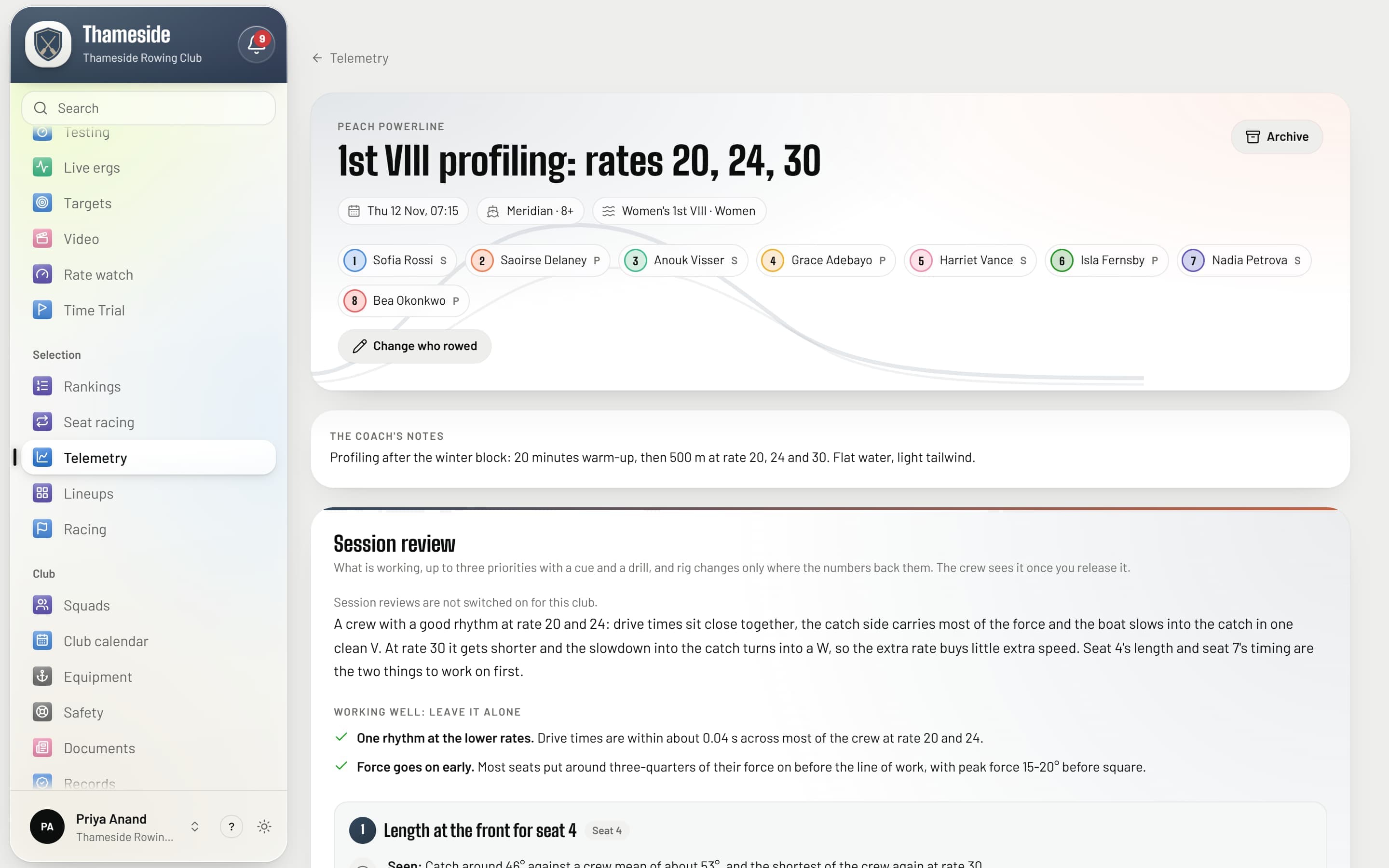
A telemetry session on a laptop: the crew, the coach's notes and a session review
Telemetry from NK, Peach PowerLine, Quiske and RP3, read seat by seat, with a review in a coach's words.

Race day

The whole regatta, in every pocket.

Import the draw and each crew’s boating, warm-up and start times follow their race. If the timetable slips, everyone’s day moves with it.

  • Results wait for the coach

    Times stay with the coaches until they release them, so nobody finds out they lost from a notification.

  • Timing on your phones

    Start and finish phones on one clock, with a photo finish for the close ones, and a public results page that fills in as crews finish.

  • Travel, kit and spares

    Who’s driving, who’s in which car, the trailer list and who’s on standby.

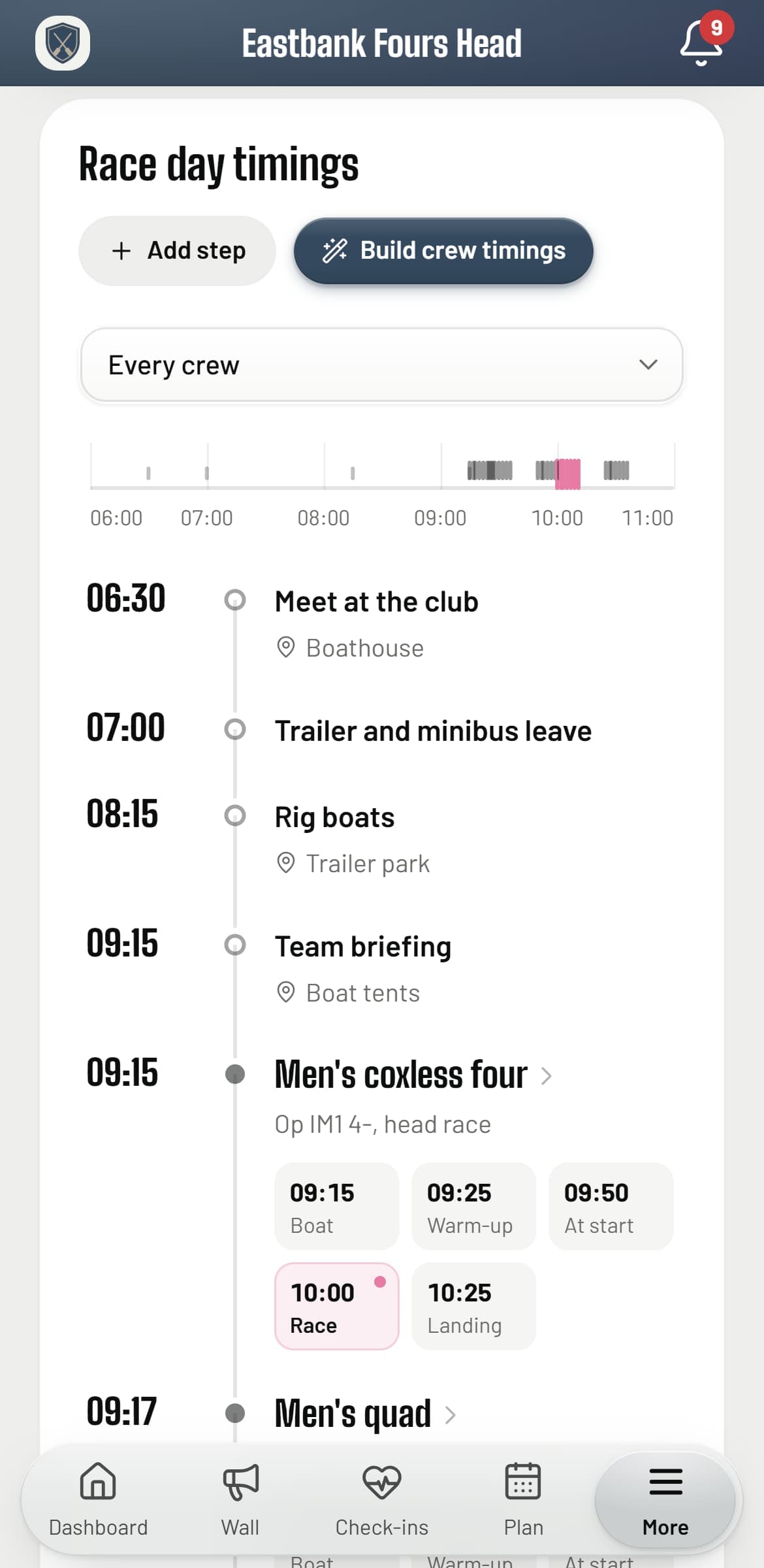
The race-day plan: meeting, trailer and briefing times, then each crew's boating, warm-up and race
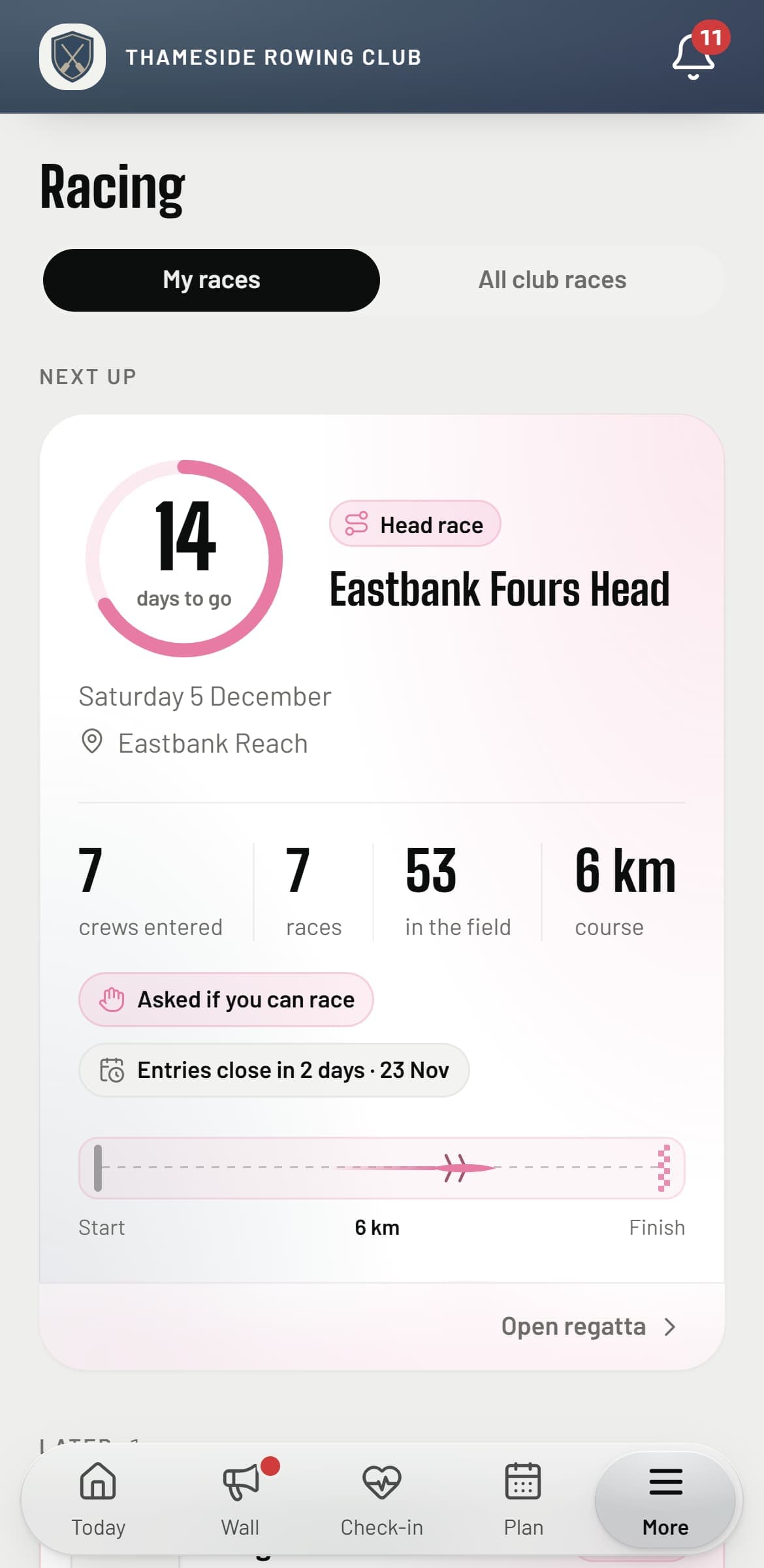
An athlete's races: 14 days to the next head race, its course and entries

What we promise a club.

Athletes own their data.

A club sees an athlete’s training only while they choose to share it.

No black boxes.

Every number shows how it was worked out. No secret scores.

Juniors are looked after.

Juniors join with a parent, and a parent reads every coach message until 18.

Nothing gets deleted.

Who sat where, and when, is always there to settle the argument.

See it with a full club.

The demo club has 127 athletes, a season of training and its next regatta planned. Sign in as anyone and look around.